
Jito to Use JTX Revenue to Burn JTO Tokens
On July 13, Solana-based staking protocol Jito officially approved JIP-38. Under the proposal, all JTX revenue allocated to the DAO will be used to purchase JTO on the open market and permanently remove the acquired tokens from circulation for at least one year after the exchange launches.
JTX will retain 20% of its trading fees to fund the platform’s continued development. The remaining 80% will be transferred to the DAO, which will use the funds to buy back and burn JTO tokens.
The arrangement will remain in effect for at least one year following the launch of JTX and will then be reviewed by the community in the fourth quarter of 2027. The commitment is linked to Jito’s plan to launch JTX, its new on-chain trading platform, in July 2026. During the initial phase, JTX will support spot trading on Solana before expanding into perpetual futures and prediction markets.
Jito Adopts a Token-Centric Network Model
Jito also introduced a broader development strategy based on a “Token-Centric Network” model. Under this structure, all revenue generated by the network will be directed to the Jito DAO.
JTO holders will decide how the funds are used through Jito Improvement Proposals, including token buybacks and burns, potential profit distributions and funding for ecosystem growth incentives. According to Jito, this approach addresses the long-running debate over whether the value created by a blockchain network should accrue to its token or to the company developing the technology.
Jito has chosen to direct that value to the DAO, allowing JTO holders to determine how revenue is allocated and establishing the foundation for the project’s long-term economic governance model.
Any authority delegated by the DAO to the Dev Council can also be revoked through a vote by JTO holders, ensuring that final control remains with the community.
JTO Buybacks Will Be Automated
To implement the proposal, Jito will use an automated mechanism called Rev Splitter instead of conducting token buybacks and burns manually.
The system will receive the share of JTX revenue allocated to the DAO, automatically purchase JTO on the open market and burn all acquired tokens. Every stage of the process will be recorded publicly on the blockchain, allowing anyone to verify the transactions.
During the initial phase, Rev Splitter will be operated by the Dev Council under authority delegated by the DAO. Once the mechanism is functioning reliably, Jito plans to automate it fully. The DAO will also publish regular reports detailing the revenue received, the amount of JTO repurchased, the number of tokens burned and the related on-chain transactions.
Buybacks and burns will remain the default revenue allocation mechanism for at least the first year. After that period, JTO holders will review the model and may vote to adopt other revenue distribution options if they are considered more beneficial to the network.
Rev Splitter is expected to be completed by the official launch of JTX, while the first buyback and burn programme is scheduled to begin in the third quarter of 2026. The entire system will be reviewed again in the fourth quarter of 2027.
JTO Price Rises More Than 9%
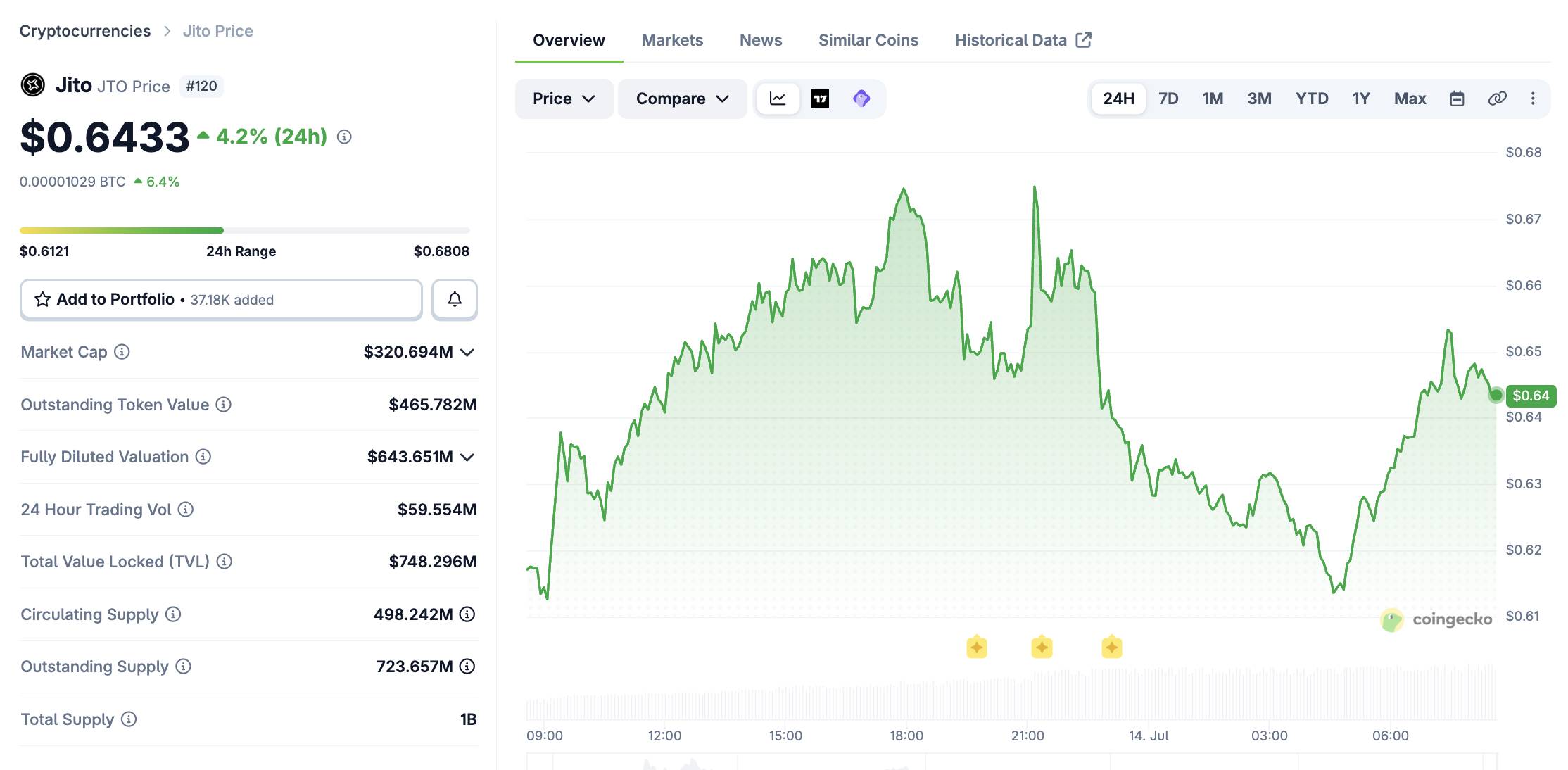
Following the announcement, the JTO price jumped by more than 9%, rising from 0.61 USD to 0.67 USD. At the time of writing, the token was trading near 0.64 USD.
conclusion: Jito’s decision ties JTX revenue directly to JTO through a transparent buyback-and-burn mechanism. The model may support long-term token value, although its real impact will depend on JTX trading activity and the revenue generated after launch.
JTO can be purchased through cryptocurrency exchanges that support the token. FORECK.INFO offers a crypto exchange rating where traders can compare platforms, fees, supported assets and user reviews. Before registering, check whether JTO is listed and whether the exchange is available in your region.